
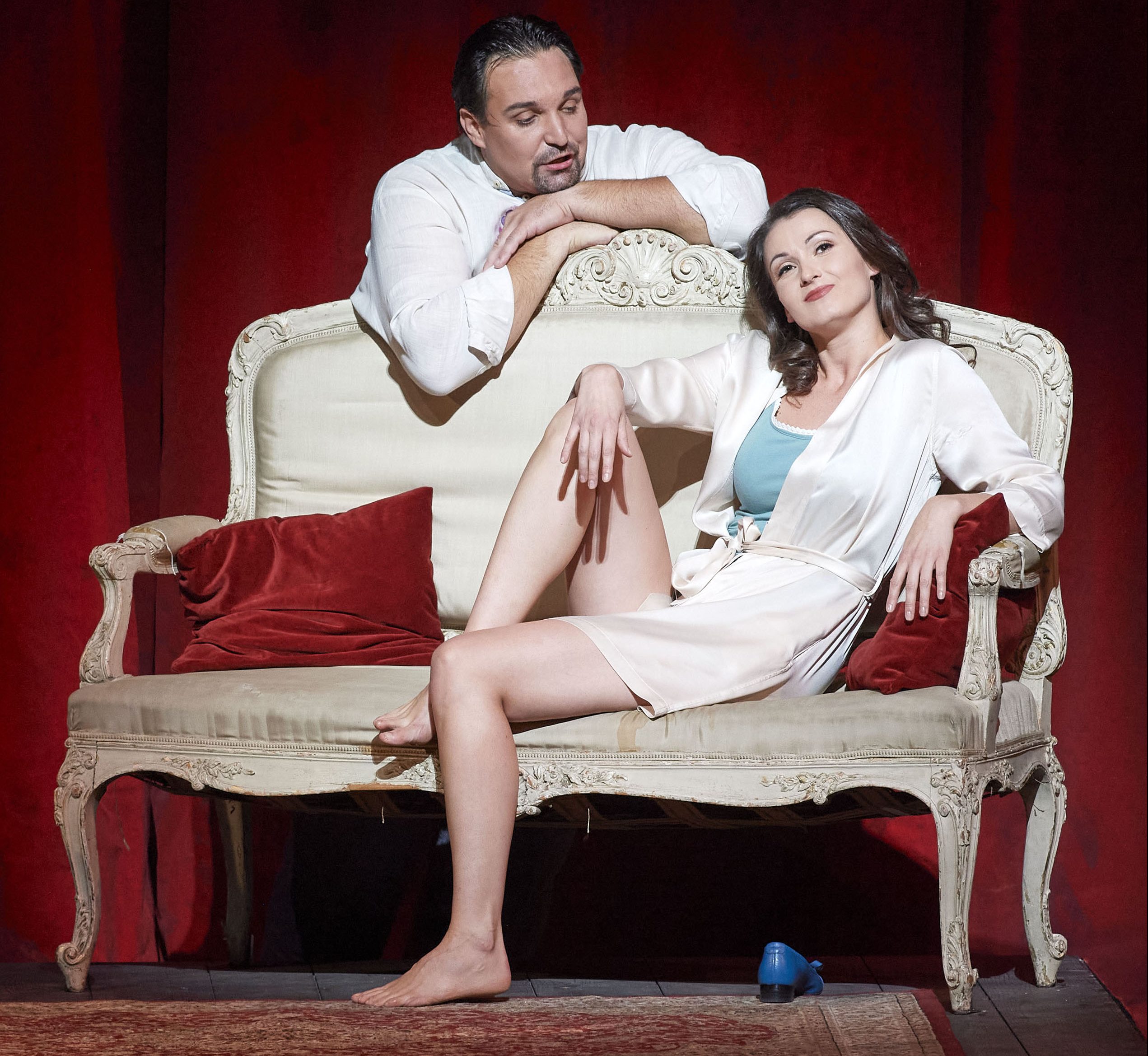
Teatro alla Scala │ Carmen │ Michaela

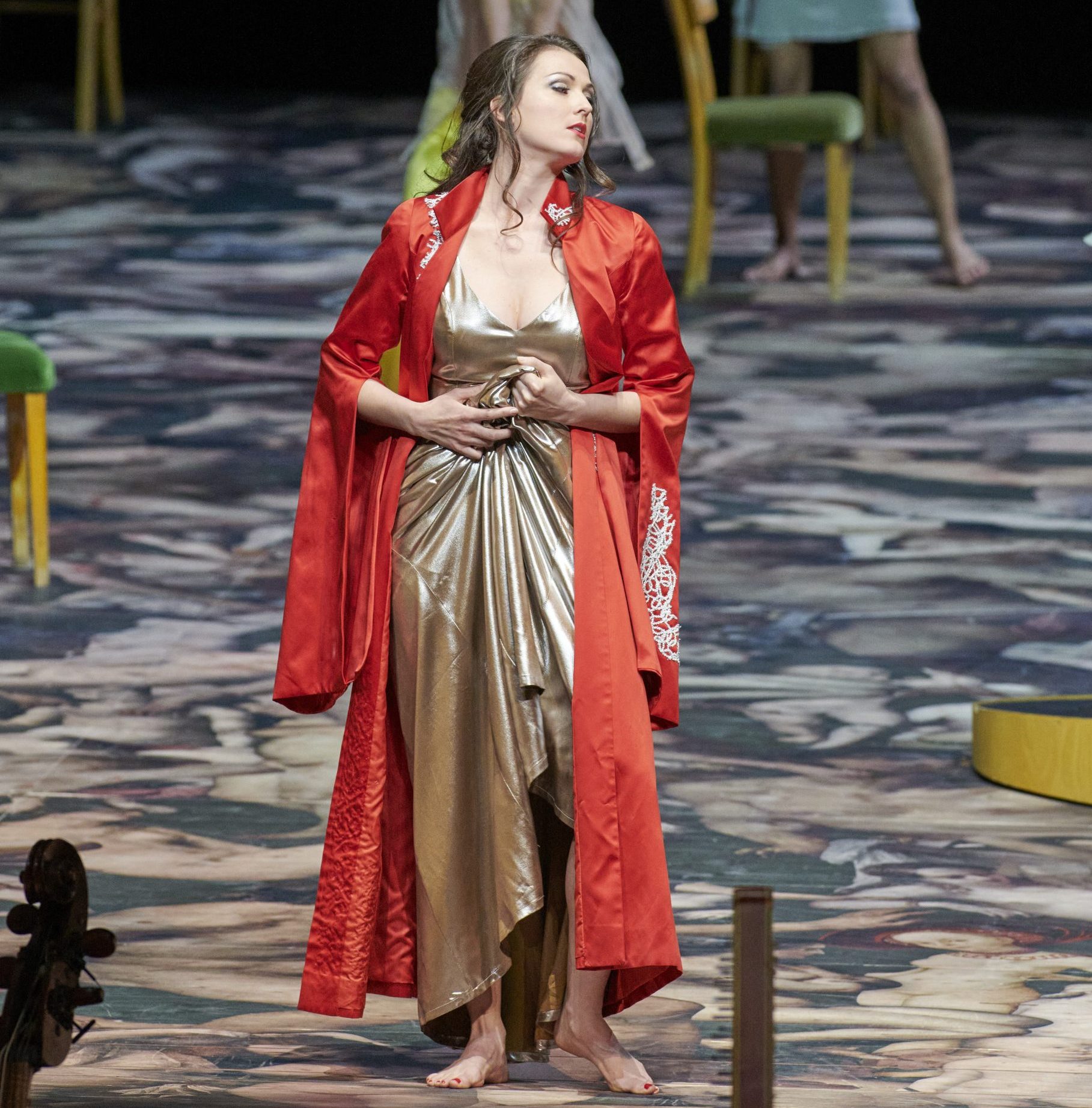
The company’s real revelation, however, is the Micaëla of Slovak soprano Slávka Zámečníková. She emerges as the clear standout of the cast, both vocally and dramatically. Her voice is radiant and crystalline, the tone impeccably focused and evenly produced throughout the range. The legato flows effortlessly, the phrasing is poised and expressive, and her innate musicality is evident in every line. Her “Je dis que rien ne m’épouvante,” becomes one of the undisputed highlights of the evening, uniting quisite delicacy with remarkable inner strength and a deeply noble, sincere expression.

operamundus.com

As the pure-hearted Micaëla, the Slovak soprano Slávka Zámečníková shines with a clear, radiant voice, crystalline in the upper register and impeccably clean, focused, and even throughout the range. Graceful in appearance and entirely convincing in the role, she brings both lyric warmth and quiet resolve to the Act III aria, “Je dis que rien ne m’épouvante,” earning warm, well-deserved applause from the audience in the middle of the scene.

connessiallopera.it

On the other hand, Micaela Slávka Zámečníková delivered a positive performance, distinguished by vocal clarity and interpretive assurance. The character acquires a clearly defined expressive unity, especially in her ability to maintain balance and measure in the most lyrical moments.

operaclock.com

Slávka Zámečniková offered a highly musical and refined Micaëla. Her voice possessed a bright, agile, and very appealing timbre, supported by clean vocal production and a remarkable command of legato. The production presents the Slovak soprano as a shy, almost childlike young woman. Within those parameters, she created a character that was both believable and sincere. Her great third Act aria, “Je dis que rien ne m’épouvante,” was delivered with fine musicality and expressive sensitivity. Her duet with Don José, “Parle-moi de ma mère!” proved vocally solid and stylistically impeccable on the part of others.

operawire

The finest performance of the evening was Slávka Zámečníková’s Michaela: a voice of remarkable purity-intense, radiant, harmonious, and perfectly balanced across all registers. It was the first time we had heard the 35-year-old Slovak soprano, and we are certain it will not be the last.

nicolaporro.it

Making her debut on the Milanese stage, Slavka Zámečníková portrays a bespectacled Micaëla who is as naïve and awkward as can be. From her very first entrance in Act I, the clarity of her interpretation is immediately apparent through the shimmering beauty of her tone, while her impeccable control of the vocal line perfectly complements the character during her reunion with the supposedly ungrateful son, achieving complete artistic and dramatic harmony with her partner. Her Act IIl aria is a masterclass in vocal control, particularly in the seamless transitions into the upper register, while the subtly nuanced colouring of her voice brings vivid life to a character whose endearing awkwardness remains ever present.

premiereloger-opera.com

Wiener Staatsoper │ Die verkaufte │ Mařenka

Zámečníková shines with a beautiful and clear soprano.

(Zámečníková brilliert mit klangschönem und klarem Sopran.)

wienlive.at

All the trumps therefore belong to the bride Mařenka, with whom Slávka Zámečníková sets the evening aglow — especially in her enchanting aria in the third act.

(Alle Trümpfe gehören daher Braut Mařenka, mit der Slávka Zámečníková dem Abend das große Licht aufsetzt. Vor allem in ihrer verzaubernden Arie im dritten Akt.)

kronenzeitung

As Mařenka, Slávka Zámečníková combines a youthful quality with a fresh, clear voice that also conveys tragic depth.

(Als Marenka singt Slávka Zámečníková, deren
jugendliche Ausprägung eine frische, klare Stimme mit tragischer Tiefe verbindet.)

ABP News

The central voices of the evening provided true highlights. Blessed with youthful freshness, Slávka Zámečníková guides her soprano with slender grace, giving Mařenka’s emotional anguish due emphasis without sacrificing tonal beauty.

(Glanzlichter setzen die zentralen Stimmen des Abends. Slávka Zámečníková, mit der nötigen Jugendfrische gesegnet, führt ihren Sopran mit einer schlanken Grazie, verleiht den Seelennöten der Mařenka aber auch entsprechenden Nachdruck, ohne an Klangschönheit einzubüßen.)

Der Standard

The flawlessly pure soprano of Slávka Zámečníková fits in perfectly here, her Mařenka deserving the vocal crown of the evening: metaphorically speaking, not a voice with rosy, chubby cheeks, but one whose beauty shows smooth, bright features.

(Darin fügt sich der schlackenlos saubere Sopran von Slávka Zámečníková bestens ein, deren Marenka die vokale Krone des Abends gebührt: im übertragenen Sinn keine Stimme mit roten Pausbacken, sondern eine, deren Schönheit glatte, helle Wangen zeigt.)

br-klassik.de

Zámečníková herself is the true star of the evening. The Slovak may approach her role somewhat more analytically and coolly than some other interpreters, yet this in no way diminishes the youthful radiance of her voice. Her Mařenka is no longer merely a plaything of desire, but vocally combative, always controlled, and to some extent self-determined.

(Zámečníková selbst ist der eigentliche Star des Abends. Die Slowakin mag an ihre Rolle vielleicht etwas analytischer und kühler herangehen, als man das von manch anderen Interpretinnen gewöhnt sein mag, aber das tut der jugendlichen Strahlkraft ihrer Stimme keinen Abbruch. Bei ihr ist Mařenka nicht mehr nur Spielball der Lust, sondern stimmlich durchaus kämpferisch, stets kontrolliert und ein Stück weit selbstbestimmt.)

bachtrack.com

Slávka Zámečníková lends the bride an exceedingly graceful, lyrical soprano with beautiful roundness and a balanced, refined tone.

(Slávka Zamečníková verleiht der Braut einen ungemein anmutigen lyrischen Sopran mit schönen Rundungen und ausgewogenem, feinem Klang.)

Kleine Zeitung

With a crystal-clear, immaculate soprano, Slávka Zámečníková manages to move the audience as the seemingly deceived bride.

(Slávka Zamečníková mit blitzsauberem Sopran kann als Mařenka sogar berühren als vermeintlich betrogene Braut.)

Salzburger Nachrichten

Slávka Zámečníková sang with a spring-clear, light, beautiful voice — deeply touching in the aria where she truly suffers from believing herself betrayed.

(Slávka Zámečníková sang mit quellklarer, leichter, schöner Stimme, sehr ergreifend in der Arie, wo sie wirklich darunter leidet, sich betrogen glauben zu müssen.)

onlinemerker.com

Opéra National de Paris │ Rigoletto │ Gilda

It is she who wins unanimous praise: Slávka Zámečníková is an
ideal Gilda, full of sensitivity and determination. The soprano overcomes all the role’s challenges with ease, delivering both radiant high notes and crystalline pianissimi. Brava!

forumopera.com

The most beautiful surprise of the evening comes from the nuanced and sensitive performance of Slávka Zámečníková – a name to remember. In her first appearance, her way of phrasing has this innocent, graceful and youthful quality, that immediately sends shivers down the spine. The timbre is fruity, her voice expands, her high notes are absolutely confident and stable while remaining delicate when she affirms her love, especially in her “Caro nome”. The artist knows perfectly how to convey to the audience the extent to which her love for this “Gualtier Maldè” will be irremediable whatever happens. Her “Tutte le feste al tempio” rises to yet another level, we weep with her. She dies in a supreme moment of emotion, her voice suspended as if by a thread, utterly pure. She received a standing ovation, and we hope to see her again very soon!

cult.news

In her role debut, the Slovak soprano shines in her aria of illusion with a sensational legato, intoxicating trills, and an agility that carries a certain depth reminiscent of Scotto, even Callas.
Ethereal in the earlier duet with her father – particularly thanks to her stratospheric vocalisations – she contrasts her angelic fragility with the jester’s gravity. (…) He forms an ideal pair with Zámečníková’s Gilda, especially in their love duet, where his vigor in the stretta complements the virtuosity of his partner.

premiereloge-opera.com

Slávka Zámečníkova proves to be an exceptional Gilda. Her clear, full-bodied voice defines her youthful character while fully embracing the breadth of Verdi’s phrasing. She finds her place with ease among a predominantly male cast, responding effortlessly to the intensity of the ensembles. Her voice quite literally soars in “Caro nome” with a play of nuances and entirely controlled and mastered high notes.

olyrix.com

Wiener Staatsoper │ Die Zauberflöte │ Pamina

The crown of the evening goes to Zámečniková for a Pamina of heart tones: her soprano sounds full and noble, she phrases beautifully and with undisguised expression.

Die presse

The Pamina of Slávka Zámečníková is excellent in every way.

Kurier

Slávka Zámečniková is an expressive Pamina.

Online merker

Slávka Zámečníková, who shows her bell-pure soprano as Pamina.

falter.at

…Pamina, who is excellently sung by Slávka Zámečníková.

news.at

The world class Slávka Zámecníková (as Pamina) shows clarity, conciseness and noble performance.

Der Standard

Slávka Zámečníková impresses with the elegance of her noble soprano voice, warmth of the timbre and her noble phrasing.

Kronen Zeitung

Slávka Zámecniková was particularly convincing as Pamina in all her needs.

Salzburger Nachrichten

Slavka Zámečníková sang with limpid tone as a wonderful Pamina.

Gramophone.co.uk

Wiener Staatsoper│ Le nozze di Figaro │ Susanna

The laurels rest with the lovebirds at the heart of the opera: the exuberant partnership of Peter Kellner’s Figaro and Slávka Zámecníková’s Susanna
anchored the performance. Commanding the centre of gravity, Kellner gave a highly dynamic portrayal, singing with unending energy and wit, while Zámecníková charmed in equal measure with her delightful, shimmering lyric soprano, “Deh, vieni non tardar” delivered with a touch of delectable playfulness.

Bachtrack.com

Slavka Zamecnikova is an enchanting Susanna, wise and clever, she knows how to use the Count’s stalking to her advantage. In the disguise of a countess in the fourth act, she shows that she definitely has what it takes to be a real countess.

onlinemerker.com

Spectacular work by Slávka Zámecniková as Susanna, the Almaviva’s servant. In addition to the undoubted beauty of the voice, she has a wonderful technique that allows her to move through the entire range without any problem, giving her role, fundamental in the work, even greater relevance. I liked her above all in the interrelationship with all his companions, duos, trios or concertantes where she was always at a very high level.

planeamagazine.com

The beautiful voice of Susanna (Slávka Zámecníková) is powerful, full-bodied, but also technicaly very well placed.

cult.news

Theatre des Champs-Elysées │ Don Giovanni │ Donna Anna

Slavka Zamecnikova’s Donna
Anna is just extraordinary. Her brilliant timbre and crystalline accuracy make us rediscover a myriad of nuances in each intervention of this often very austere character. She plays Anna to perfection and we notice an overflowing musicality. We very much hope that she returns to Paris soon and especially for a recital in order to hear her again in the full spectrum of her range.

classiquenews.com

Wiener Staatsoper │ Der Rosenkavalier │ Sophie

The three female lead roles could hardly be better cast. Slávka Zámecniková as Sophie warbles sensually, like a nightingale. An ensemble member who turns everyone’s head. No wonder that the pubescent Octavian falls for her with this disarming voice.

klassik-begeistert.de

Slávka Zámecniková seems to be born for this role. The shimmering soprano reminded Lucia Popp, but Slávka is different. She is beautiful, fragile, her voice is ringing and she phrases delicately, but there is more temperament in her. She knows how to be quiet – the role dictates it to her – but she can also be forceful to fight, as when she flatly refused future bridegroom, because he is a grave man and especially unfaithful. Finally she dives into the arms of Octavian. During their final duet in a gentle embrace with beautifully phrased singing and expression, the audience had a hard time to hold back emotions.

operaslovakia.sk

San Francisco Opera │ L’elisir d’amore │ Adina

Slovakian soprano Slávka Zámecníková made an absolutely mesmerizing US and role debuts as the precocious Adina who receives a valuable lesson in love. Dressed in Hopkins’ gloriously colorful attires, Zámecníková looked like a million bucks, as if she was an Italian socialite. Vocally, she was even better; her bright gleaming voice sounded round, lovely and expressive, and she effortlessly negotiated the many coloratura passages like a well-seasoned veteran. She imbued the role with a sense of confidence and tenderness, and she established good rapport with everyone on stage. Hopefully, she will come back to War Memorial stage as either Norina or Susanna, both of which she has performed in Vienna!

parterre.com

Adina, deftly sung by soprano Slávka Zámečniková, in her American debut. She sang with ease and flexible beauty of voice. This tessitura matched her physical dynamics on stage, springy and agile, centered as it was in the upper part of her body. She had much spring in her voice as in her steps. The emphasis was on her detachment rather than her emotional commitment, fitting with her characterization. Her voice didn’t let her down. As she cavorted around the stage with the hop, skip and jump of a butterfly, rejecting the affection of Nemorino cool and aloof, her voice led her exactly where she wanted to go. 

operawire.com

Making her SF Opera and role debuts, Slávka Zámečniková was a winning Adina, here the wealthy and well-dressed owner of a namesake hotel. It’s a challenging role that until the end of the second and final act doesn’t allow a lyric coloratura soprano to show off her technique or revel in her high notes. But when the moment finally came, Zámečniková excelled. Her top note at the end was as spot on as it was sweet. If some exponents of the role have more successfully integrated strength and vulnerability into their sound, Zámečniková compensated with stage presence and acting. She also impressed with her ability to soften higher up in her range to produce sweet, resonant head tones without edge.

sfcv.org

Zámecníková, a Slovakian artist whose career has been spent mainly in Germany and Austria, gave a masterful performance as Adina, lofting crystalline peals of melody and capturing the character’s blend of supercilious tenderness.

datebook.sfchronicle.com

He was well matched with soprano Slávka Zámečníková, in her American debut. Her voice is elegant and very pretty, and she seems to sing without effort. Her Act II aria “Prendi, per me sei libero” was splendid.

operatattler

Equally remarkable for her coloratura vocals, notable throughout the opera, Slovak soprano Slavka Zamecnikova, as the aloof Adina, impressed right away in the Act 1 duet with Pati, “Chiedi all’aura lusingghiera” (Ask the flattering aura why it flies without rest).

hereporter.com

Making her commanding American and role debut as Adina is Vienna-based Slávka Zámečníková.  With a voice both silken and agile, the soprano fits well musically into the bel canto role, navigating both the luxuriant and staccato elements of the score.  She captures both the warmth and aloofness of the character.  In her lovely “Della crudele Isotto,” which tells of the use of a love potion in the legend of Tristan and Isolda, Nemorino comes to believe that such a potion might help him win Adina over.  Zámečníková also delights in her duet with Pati, “Chiedi all’aura lusinghiera,” showing great range and vocal beauty.

berkshirefinearts.com

As Adina, soprano Slávka Zámečníková made the most of her United States debut. Her lyric voice, heftier than we usually hear from Adina, handled all the music – including the challenging coloratura in the finale – with ease. 

seenandheard-international.com

As Adina, Slávka Zámečniková sang beautifully, in a voice full of strength and rich in color. 

berkeleydailyplanet.com